 by Jessica Newman

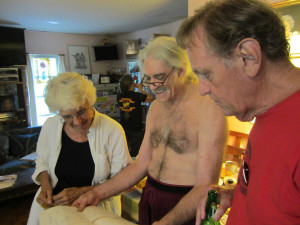
On Aug. 31, 1973, the Gainesville Eight were acquitted of charges of conspiracy to violently disrupt the 1972 Republican National Convention in Miami Beach. Their acquittal came at the end of a 14-month long, highly publicized legal battle, and many of the truths it exposed still ring true today. That’s why, 40 years later, three of the original defendants (Scott Camil, Peter Mahoney and Don Perdue) and 12 others involved with the trial reunited in Gainesville—preserving history to prevent it from repeating itself.
The Gainesville Eight were made up of eight anti-war activists, seven of whom were members of Vietnam Veterans Against the War (VVAW). Their plans for a peaceful, anti-war demonstration at the 1972 RNC were disrupted by law enforcement agents—from the Federal Bureau of Investigation on down to the Dade County Public Safety Department—who infiltrated the group and attempted to sway VVAW toward a more violent approach.
Eventually, the Gainesville Eight were indicted by grand jury investigation with conspiracy “to organize numerous ‘fire teams’ to attack with automatic weapons fire and incendiary devices police stations, police cars and stores in Miami Beach” using “lead weights, ‘fried’ marbles, ball bearings, ‘cherry’ bombs, and smoke bombs by means of wrist rocket slingshots and cross bows.”
The Gainesville Eight posed only a political threat to the U.S. government, if they posed any threat at all. They came back from Vietnam; they had seen firsthand what was going on there. And people listened to them.